Protective styles: a practical guide
A protective style tucks your ends away and cuts down daily combing, heat and styling, giving textured hair a break. It only protects if it's installed without excess tension, kept clean and moisturized, and taken out on time, which for most braids, twists and faux locs means within about six to eight weeks.
Braids
Box braids
Individual three-strand braids on square (box) parts, usually with added braiding hair. Size sets the time and weight: jumbo braids are quick but heavy at the root, while small braids take much longer and last longer. Knotless box braids start with your own hair and feed extension hair in gradually, so there's less pull at the root and the braids lie flatter. They take longer to install and usually cost more.
Fulani braids
Named after the Fulani people of West Africa: cornrows along the front or center of the head, often with a braid running down the middle, combined with individual braids at the back and sides. Beads, cuffs and shells are traditional. Thinner cornrows at the hairline mean that's where tension needs the most care.
Cornrows and stitch braids
Hair braided flat to the scalp in rows. Stitch braids use small horizontal sections to create crisp, evenly spaced "stitches" along each row. Quick to install, and worn for a shorter time than individual braids.
Boho (goddess) braids
Box braids with loose curly strands left out along the length. The loose curls tangle fastest; a little leave-in or mousse keeps them defined.
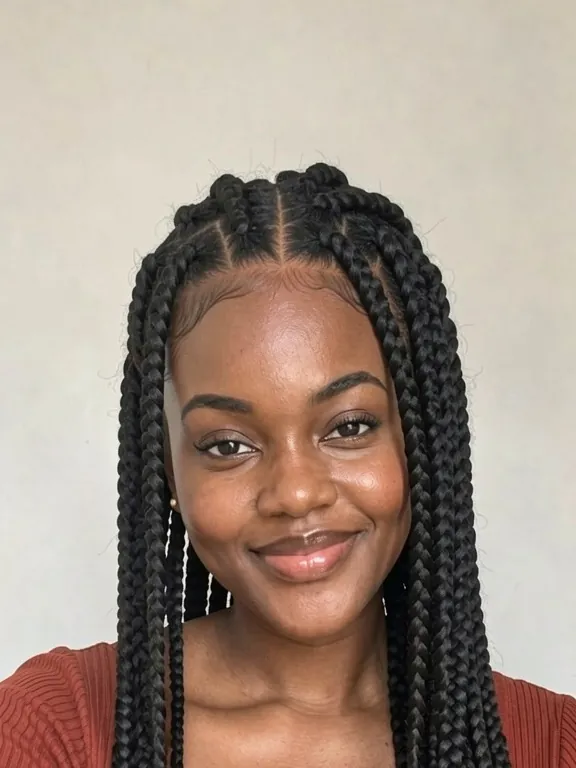
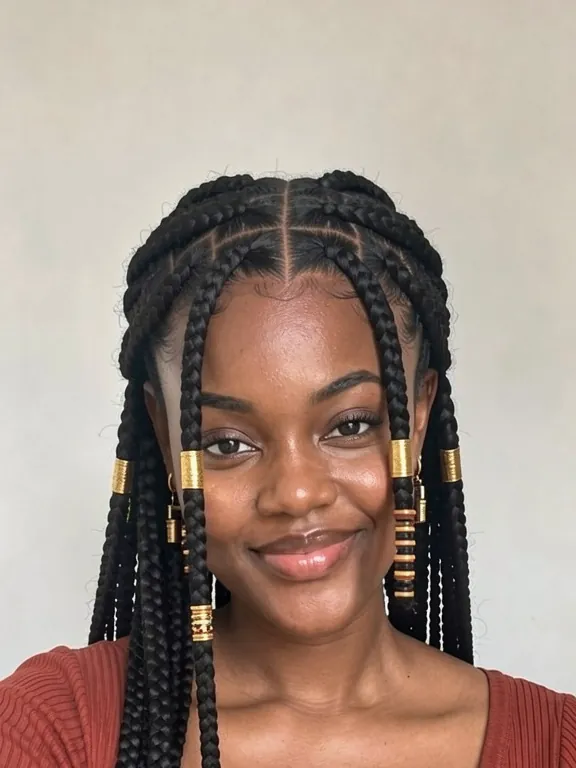
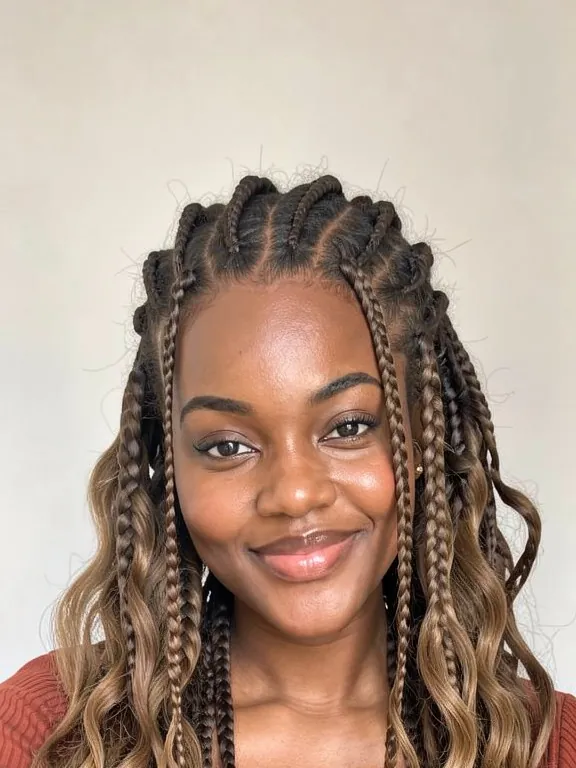
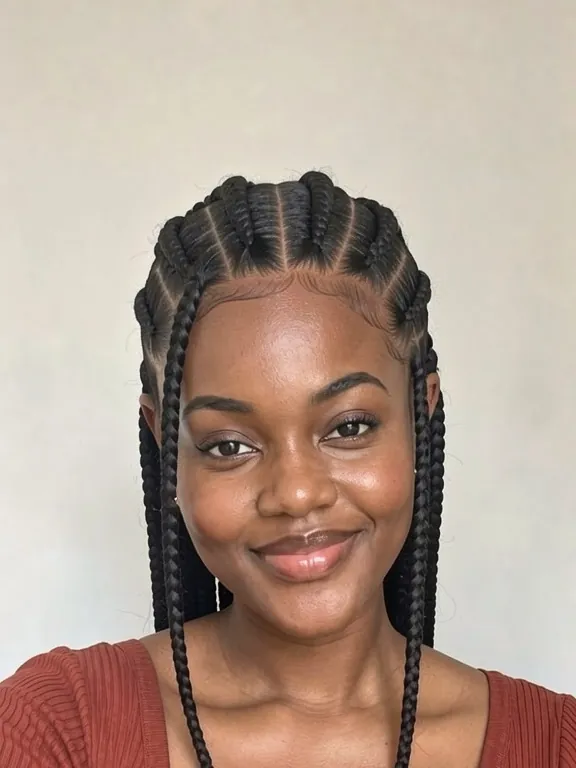
AI previews made with SwapHair from one photo of each person. They show the look of each style, not install quality.
Twists and locs
Senegalese twists
Two-strand rope twists made with smooth extension hair, with a sleek, glossy finish. Usually quicker to take down than braids.
Passion twists
Two-strand twists made with a wavy or curly fiber, giving a softer, bohemian texture. Typically shoulder to mid-back, lighter than long box braids.
Butterfly locs
Faux locs with a deliberately distressed, looped texture, made by wrapping curly hair loosely around a base. Lighter and messier than traditional faux locs, and often worn at shoulder length.
Loc bob
Faux locs (or real locs) cut to bob length, from the chin to the shoulders. Shorter means lighter on the scalp and quicker to dry after washing.
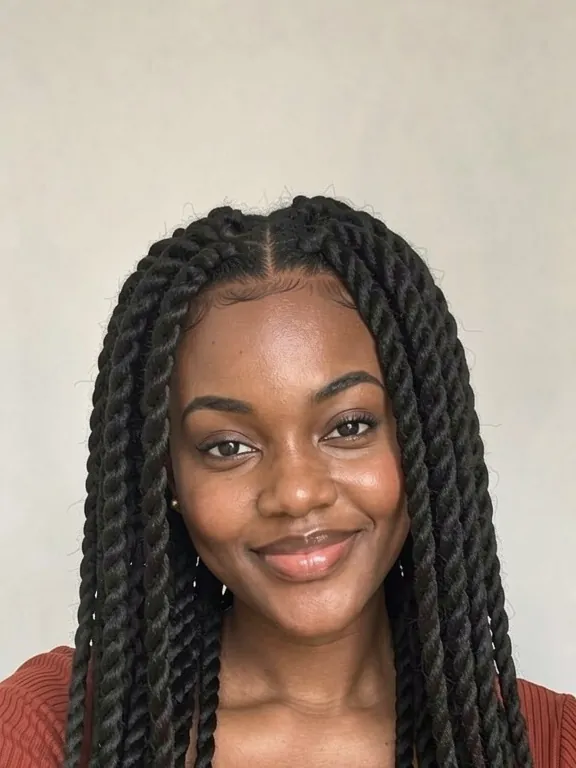
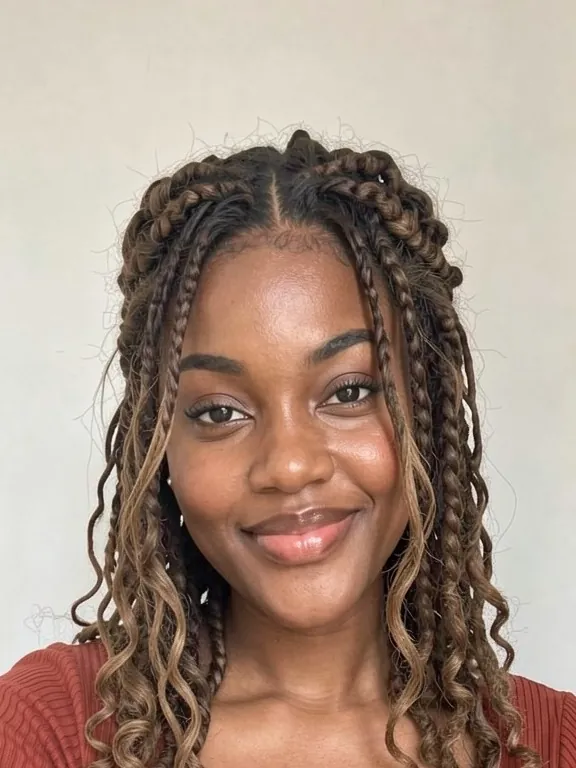
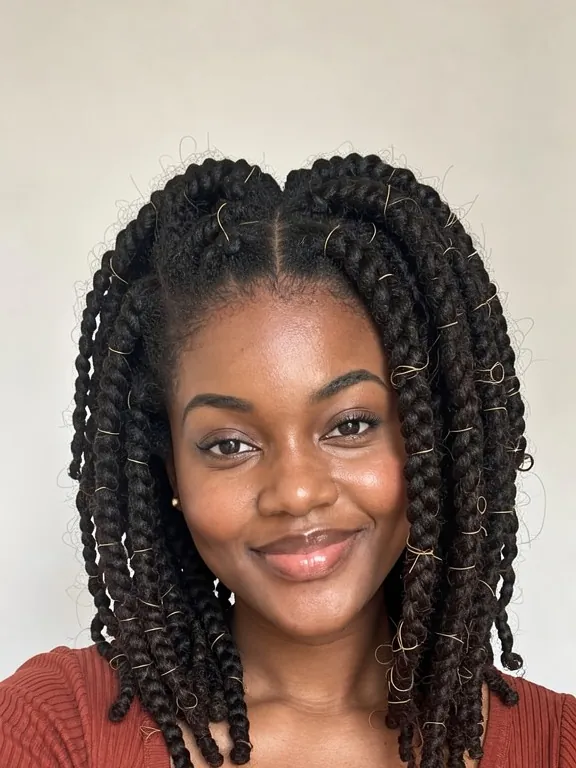
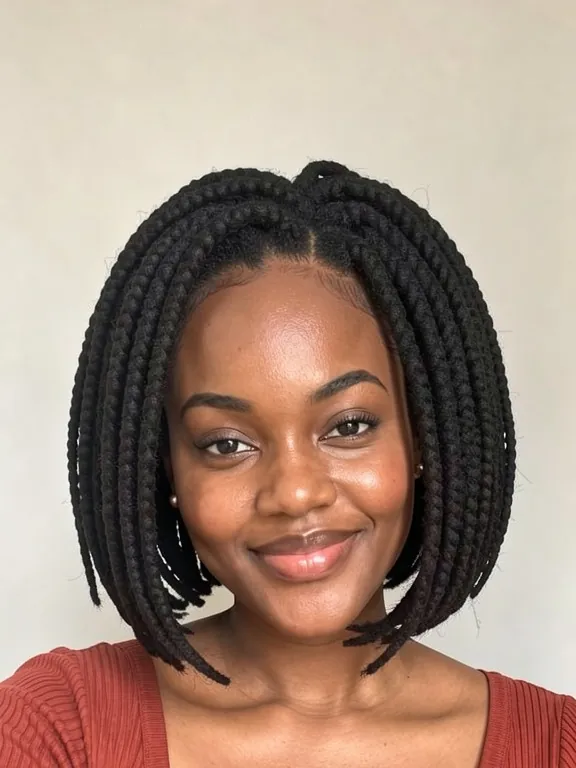
AI previews made with SwapHair from one photo of each person. They show the look of each style, not install quality.
Install time and wear at a glance
| Style | Typical install | Typical wear | Weight |
|---|---|---|---|
| Box braids (medium) | 4 to 8 hours | 4 to 8 weeks | Medium to heavy, depending on length |
| Knotless braids | Longer than knotted | 4 to 8 weeks | Lighter at the root |
| Fulani braids | 3 to 6 hours | 4 to 6 weeks | Medium |
| Senegalese twists | 4 to 8 hours | 4 to 6 weeks | Medium |
| Passion twists | 3 to 5 hours | 4 to 6 weeks | Light to medium |
| Butterfly locs / loc bob | 3 to 6 hours | 4 to 8 weeks | Light to medium |
| Cornrows, own hair | 1 to 3 hours | 1 to 3 weeks | Light |
These are rough salon ranges, not promises. Braid size, length and your stylist's speed change everything, so ask for a time estimate when you book.
Tension and your edges
Braids shouldn't hurt. Pain, tightness that lasts beyond the first day or two, small bumps along the hairline, or skin pulled up into little tents at the root all mean a section is too tight. Ask the stylist to loosen or redo it before you leave. Dermatologists warn that repeated pulling on the hairline can lead to lasting hair loss known as traction alopecia, so:
- Ask for larger, looser braids around the hairline, or leave the edges out.
- Skip very long, heavy styles if your hair is fine or your edges are already thin.
- Don't stack tight ponytails and buns on top of a fresh install.
- If you notice thinning at the edges, give your hairline a long break and see a dermatologist.
Caring for your hair underneath
- Cleanse the scalp every week or two with diluted shampoo in an applicator bottle, focusing on the parts, then rinse well.
- Dry completely. Thick braids and locs hold water; air-dry fully or use a hooded dryer so they don't develop a musty smell.
- Moisturize lightly with a water-based leave-in or braid spray. Heavy oils and gels build up.
- Sleep in satin or silk, a bonnet, scarf or pillowcase, to cut frizz and friction.
Taking it down
Detangle each section slowly, from the ends up, before washing. The loose hair you'll see is mostly normal daily shedding that stayed trapped in the style. Deep condition, trim any damaged ends, and give your hair and scalp at least a week or two before the next long install.
Protective styles for men
Two-strand twists, cornrows, stitch braids and starter locs all keep short to medium textured hair low-maintenance between cuts. Pair them with a taper or low fade so the sides stay neat while the top is in.
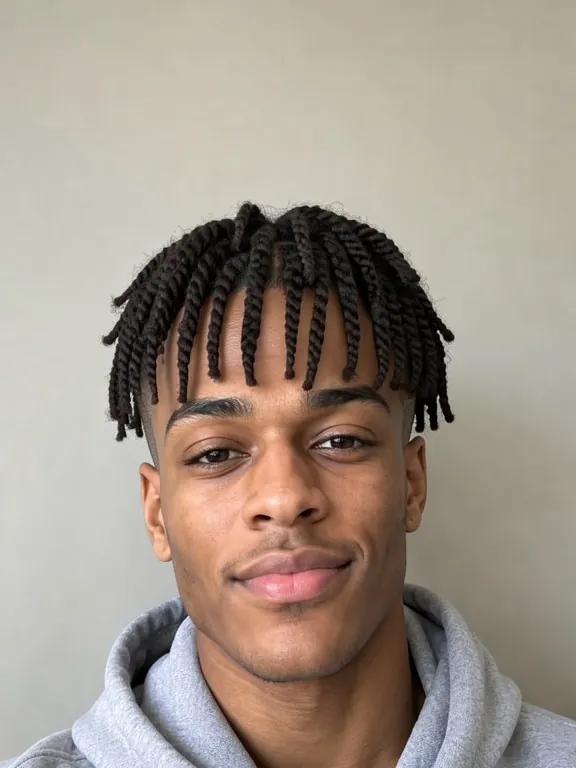
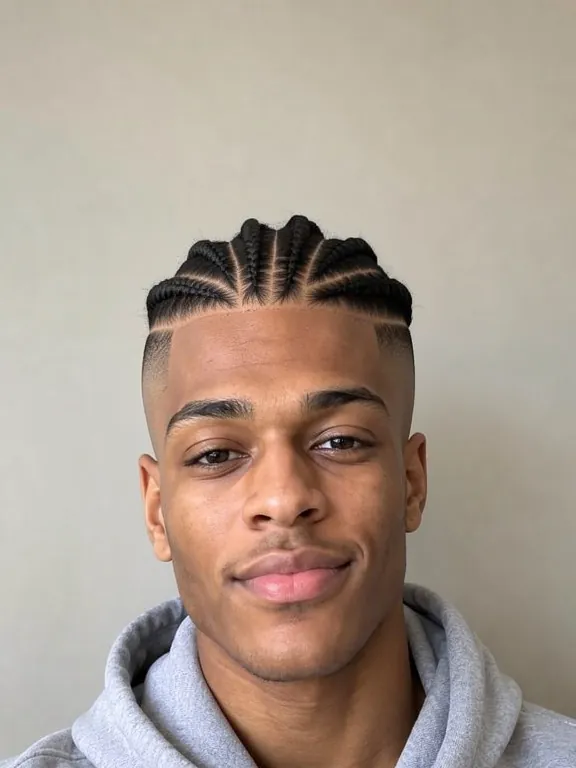
AI previews made with SwapHair from one photo of each person. They show the look of each style, not install quality.
FAQ
How long can I keep box braids in?
Most stylists recommend taking box braids out within about six to eight weeks. After that, new growth makes the roots fragile, buildup collects, and hair can start to lock where it's braided.
Are knotless braids better than regular box braids?
They put less tension on the root at the start and lie flatter, so many people find them more comfortable. They take longer to install and usually cost more. Knotted braids are quicker to install.
Do protective styles actually protect your hair?
They can, by reducing daily combing, heat and friction on the ends. They stop helping when they're installed too tight, left in too long or not kept clean, which can cause breakage at the root and hairline.
How do I wash my hair with braids in?
Every week or two, apply diluted shampoo to the scalp with a nozzle bottle, massage the parts gently, rinse thoroughly and follow with a light leave-in. Then dry the braids completely.
Which protective style is the lightest?
Shorter styles with less extension hair: a loc bob, shoulder-length passion twists or butterfly locs, or cornrows on your own hair. Long, small box braids carry the most weight.
Can men wear protective styles?
Yes. Two-strand twists, cornrows, stitch braids and starter locs are common. They're often paired with a taper or low fade to keep the sides sharp.